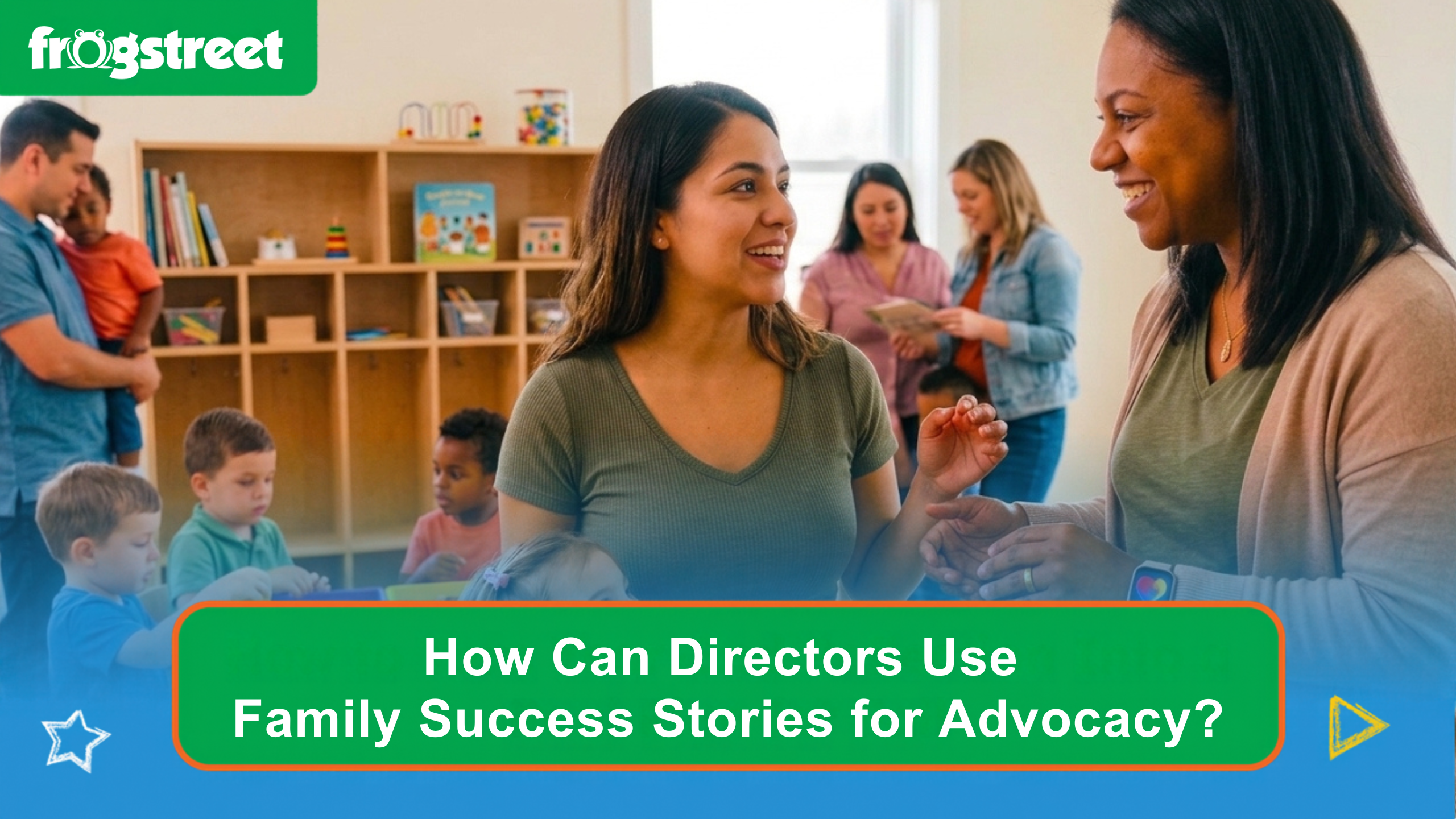
Family success stories are authentic, permission-based accounts of how a child or caregiver has experienced growth, confidence, or connection through your program. A caregiver’s comment at pickup about a new skill, smoother transition, or change at home can become a meaningful example of impact when it is documented and shared responsibly.
You may hear a family say their child is using words to express frustration instead of becoming overwhelmed, building on strategies practiced in the classroom. In the moment, it can feel like a meaningful sign of progress. It can also raise a bigger question: Could this experience help another caregiver better understand the difference your program is making?
With permission and honest language, it can. One family’s experience, shared thoughtfully, can help bring your program’s work to life in enrollment conversations, board presentations, funder updates, and community outreach. That is the practical value of ethical family storytelling: turning everyday feedback into a clear, authentic example of a family’s experience.
Key Takeaways
- Family success stories can turn everyday moments of growth and connection into authentic examples that help families understand your program.
- Trusted family experiences can shape how families learn about and consider early childhood programs.
- Strong family success stories often begin in familiar touchpoints, such as family letters, conferences, home activities, and transition conversations.
- Ethical storytelling protects family trust through clear permission, honest language, and thoughtful choices about photos, names, and outcomes.
- One family success story can be adapted for newsletters, enrollment materials, board updates, and funder conversations when each use stays within the family’s permission and the story’s original meaning.
What Are Family Success Stories, and Why Do They Matter for Advocacy?
Family success stories can turn lived experiences of child growth, caregiver confidence, and home–school connection into meaningful examples of what your program makes possible. A caregiver mentioning that their toddler is naming feelings at home, or that their child is waiting for a turn with less support, is more than a nice moment. It can give prospective families a concrete example of what learning and growth may look like for children participating in your program.
Whether that moment stays a private thank-you or becomes something you can share depends on what it documents, who it serves, and whether the family gives permission to share it. A note in a family’s file may support documentation. A story shared with permission and framed honestly can also help families, community partners, or other stakeholders understand how children and families experience the program and the kinds of growth they are seeing.
How This Differs from Progress Documentation and Educator Recognition
You can think of advocacy stories as outward-facing, while progress documentation records a child’s development for program purposes and educator recognition strengthens teaching-team culture. Each purpose calls for a different treatment of the same classroom moment.
An observation of a toddler using new words at pickup might be documented as evidence of language growth, as explored in how child progress becomes visible in Birth-to-Five programs. That same moment could also recognize the educator who supported that growth. Turning it into a public story requires a third step: obtaining family permission, identifying the intended audience, and shaping the language appropriately for how and where the story will be shared.
For guidance on keeping documentation simple and useful, see authentic assessment strategies for busy educators.
Why Does Word-of-Mouth Trust Matter When Families Choose Early Childhood Programs?
You can support enrollment by recognizing the role authentic family experiences can play in how caregivers learn about and evaluate early childhood programs. Research reviewed by the Office of Planning, Research, and Evaluation found that parents often rely on family members, friends, and other trusted personal contacts when searching for child care and early education. Across three sources reviewed in that research, word of mouth was the most frequently referenced source of child care and early education information.
That does not mean one family conversation will determine an enrollment decision. It means the relationships families build with your program can become part of how your community learns about you.
What Does the Research Say About Family Trust and Referrals?
Research can help explain why trusted personal connections matter, but it should not turn a family story into a promise about enrollment.
The OPRE literature review found that parents commonly learn about child care and early education through personal networks and recommendations from friends with children, relatives, and other trusted contacts. Participants also described recommendations from trusted sources as helping reinforce their comfort level with a particular provider.
For directors, that can be a useful reminder to pay attention to the everyday family interactions that shape a program’s reputation. One conversation at pickup will not fill a waitlist on its own. What it can do is become one part of the broader relationship families experience and talk about in their communities.
Where Can Directors Find Family Stories Already Happening in Their Program?
You likely already have strong family stories inside your everyday family engagement routines. You hear them in family notes, during conferences, or through home-learning activities. These moments happen every week, often without anyone writing them down.
Two places can make them easier to notice without adding a separate story-collection process to educators’ already full days: direct family communication and the patterns that surface through home-learning resources.
Family Letters, Conferences, and Home–School Connection Notes
Family letters, conferences, and home–school notes can provide natural opportunities to notice authentic caregiver language without building a separate story-collection effort. Weekly family letters that include a Home–School Connection activity may prompt a quick reply about what happened when a family tried it at home. Conferences can surface the same kind of language, and the Note From Your Teacher field on a family letter can give educators a natural place to capture what a caregiver shares.
Listen for turning-point language, such as a caregiver mentioning new words their child brought home, a smoother morning drop-off, or a child using a strategy they practiced in the program. When you or an educator notice language like this, jot down the quote, the child’s age group, and the date, then set it aside for follow-up. Routine communication can signal that a real story worth asking about just happened; sharing it publicly still requires separate permission.
How Should Directors Share Family Stories Ethically and Responsibly?
You protect family trust when every story you share is truthful, respectful, and limited to what that family actually experienced. Permission should come before a family’s story is developed for public use, whether you are asking a family to share a quote, photo, video, or translated version of their words.
When family stories are used in marketing or promotional content, truth in advertising standards require claims to be truthful, not misleading, and appropriately supported. FTC endorsement guidance also makes clear that a testimonial should reflect the family’s honest experience and should not be used to communicate a claim the program could not support on its own.
Two safeguards can help you stay on solid ground: understanding the difference between a family testimonial and a broader program claim, and establishing a clear permission process before a story leaves the program.
What Is the Difference Between a Testimonial and an Endorsement?
A testimonial is a person’s account of their experience. When that account is used in advertising or promotional content, it may be considered an endorsement under FTC guidance. A parent saying, “Drop-off got easier after the first month,” describes that family’s experience. Turning the same comment into “Our program eliminates separation anxiety” makes a much broader claim that the family’s experience cannot support.
Scope is the risk to watch. “My child started using calming words at home” is specific to one family’s experience. Turning that into “Our children develop strong self-regulation skills” makes a broader program claim. Keep the family’s actual experience at the center of the story, and avoid stretching it into a promise.
One story, told honestly and kept within its original scope, can be more meaningful than one stretched into a claim it cannot support.
How Do You Get Permission from Families to Share Their Story?
You should obtain permission that is specific, informed, and voluntary, telling families how their words, images, and identifying details will be used. Families should be able to decline without affecting their child’s experience with your program.
Before drafting anything, walk through the details with the family, including:
- Who will see the story: current families, prospective families, funders, or the public
- Which channels may carry it: newsletter, social media, website, or board report
- How long the program expects to use it
- What identifying details, names, photos, or quotes will appear
- Who will edit the story and whether translation review is included
- How the family can request changes or removal, according to your program’s policies
When appropriate, send the final version to the family for review before publishing. A clear permission and review process can help keep trust intact after the story is shared.
How Can One Family Story Fuel Multiple Advocacy Channels?
One approved family story can support enrollment conversations, community outreach, and leadership reporting as long as each use stays within the family’s permission and preserves the meaning of their experience.
That story might become a short profile for prospective families, a newsletter blurb for current families, a brief social caption, or a board-ready narrative. Each version should stay true to the family’s experience while fitting the space and purpose of its channel.
External Channels: Enrollment Materials, Social Media, and Newsletters
You can adapt the same story for enrollment materials, social media, and newsletters while keeping the family’s approved words and experience intact. What changes is the amount of context and the frame.
A prospective family reading enrollment materials may need a concise profile that names a real experience and, when appropriate, quotes the caregiver directly. That same story can become shorter for social media, with a single approved moment paired with the family’s own words. A newsletter can include more context, such as the classroom routine involved and the caregiver’s reflection.
Before publishing any version, confirm that it stays within what the family approved:
- Check that the channel matches what the family agreed to.
- Confirm identifying details still fall within their permission.
- Keep the original meaning rather than smoothing the story into marketing language.
- Avoid adding outcomes or claims the family did not make.
- Keep direct quotes accurate rather than rewriting the family’s words for a different channel.
Board, Funder, and District Reporting
Family stories can help make program information more personal for boards, funders, and district teams when they are paired with relevant program data and kept within the story’s scope. A data table might show attendance trends, while a parent’s account of feeling more comfortable walking into the classroom can illustrate one family’s experience of connection.
The Head Start FACES study found that parents reported welcoming program environments and positive relationships with staff, among other family engagement findings. That research can provide context for the kinds of experiences a family story may illustrate.
When appropriate, present your program data first, then follow with one clearly scoped family story that gives the numbers a human example. Say plainly that it represents one family’s experience rather than a program-wide guarantee. That precision keeps the narrative useful without asking it to prove more than it can.
Your Next Family Success Story Is Already Waiting to Be Told
You likely already have a meaningful family story in a family letter reply, a conference note, or another everyday exchange. Frog Street’s family engagement tools can help create consistent opportunities to notice and strengthen those connections across your program.
Pick one recent home–school exchange that made you pause and ask the family whether you can share it with a specific audience. Building that permission habit into routines you already have can make ethical family storytelling a natural extension of family engagement.
Frog Street helps programs empower connected learning communities that inspire confidence and kindness in each child, with educators and families working as partners throughout the Birth-to-Five journey. Joyful Learning. Kinder World.
If you’re ready to build a more consistent approach to family engagement and storytelling in your program, connect with the Frog Street team to learn more.
Frequently Asked Questions
How Often Should Directors Refresh Family Success Stories?
Family success stories work best when they reflect the children and families currently in your program. Review them periodically and retire or update stories when permissions, circumstances, or other relevant details change. This keeps advocacy materials current and connected to real family experiences.
Should Family Success Stories Be Written, Recorded, or Shared as Video?
Family success stories can take written, audio, or video formats. Choose the format that fits the family’s comfort level, the intended audience, and the permission you have received. A short written quote may be easier to review, translate, and reuse, while audio or video can preserve more of the family’s own voice.
How Can Programs Include Multilingual Families in Success Stories?
Multilingual family success stories should begin in the family’s preferred language whenever possible. Offer translated permission materials, opportunities to review the story in a language they understand, and flexible ways for caregivers to share their own words. Frog Street’s bilingual family materials can support more consistent home–school communication across classrooms.
How Do Directors Know Whether Family Stories Are Strengthening Community Trust?
Family stories are only one part of community trust, so directors should look at broader patterns rather than trying to attribute enrollment or engagement changes to a single story. Family referrals, tour conversations, event participation, and feedback from community partners can provide useful signals when considered alongside enrollment and engagement data.
When prospective families mention a story they heard from another family, that may be one sign that authentic experiences are traveling through the community. The larger goal is not simply to tell more stories, but to build the relationships that make those stories worth sharing.