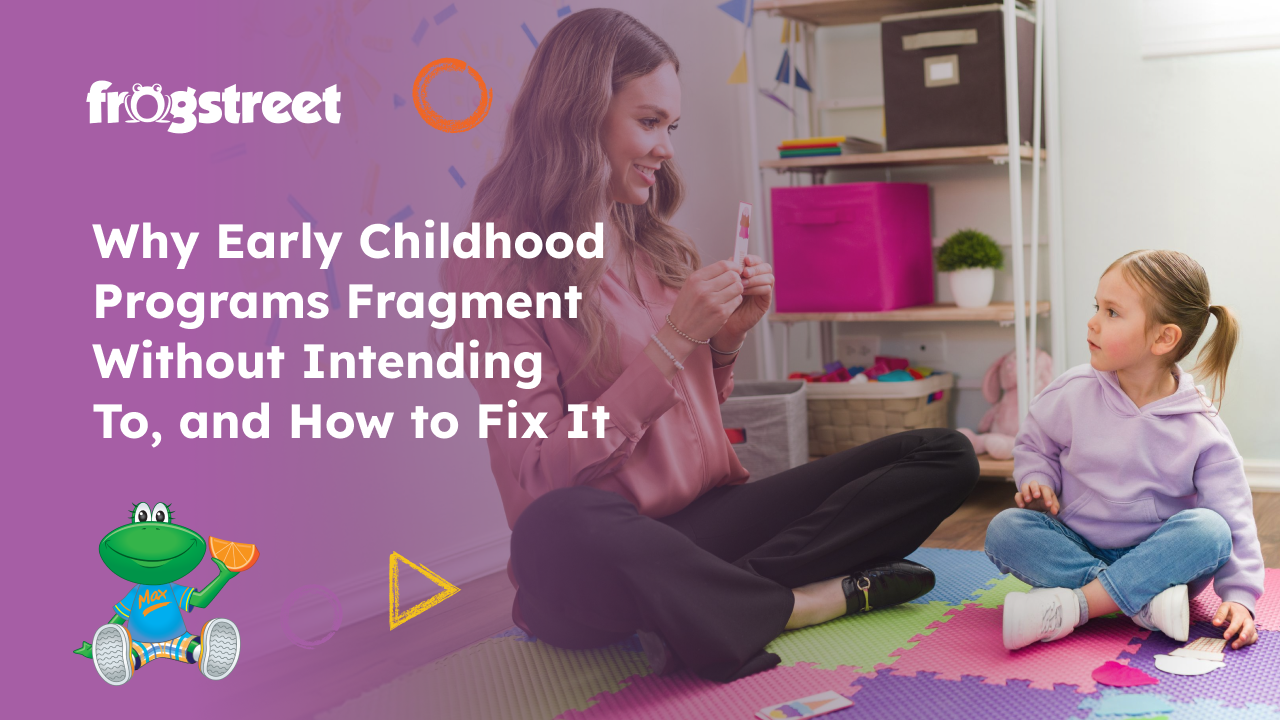
You may begin noticing moments when children enter a new classroom and pause to understand unfamiliar routines or expectations. These small moments can reveal where learning experiences connect across classrooms and where stronger developmental continuity could better support children.
Your classrooms are filled with exploration, conversation, and routines that support development every day. Teachers guide children through meaningful early learning experiences that build curiosity, communication, and independence.
Patterns become clearer when you step back and observe the full pathway from infancy through Pre-K. Across this birth-to-five journey, children experience several learning environments, and each stage contributes to development in meaningful ways.
When those stages align intentionally, learning becomes a continuous experience. As children grow, they recognize familiar routines, language, and expectations, allowing development to unfold naturally from infancy through Pre-K. Intentional learning and developmental continuity help programs create this connection.
The Natural Drift Between Classrooms
Every classroom develops its own rhythm. Teachers create routines that help children explore, communicate, and participate in daily learning experiences.
These routines become part of the classroom culture. Educators introduce language and expectations that help children feel confident and engaged.
Across a program, classrooms may evolve in slightly different ways over time. Teachers adjust their approaches to meet the unique developmental needs of the children in their care.
These differences reflect responsive teaching and supportive learning environments.
Developmental Continuity Across the Birth-to-Five Journey
Developmental continuity helps children experience learning as a connected pathway rather than a series of separate stages.
In early childhood programs, developmental continuity means that learning experiences build from infancy through Pre-K, so children strengthen skills gradually rather than starting over in each classroom.
Skills introduced early continue to grow as children move through the program. Teachers extend the learning that children have already begun exploring.
When continuity is visible, educators often observe encouraging behaviors.
- Children respond quickly to familiar routines
- Children approach learning experiences with confidence
- Teachers expand the skills children practiced earlier
- Children demonstrate independence during transitions
These signals help educators recognize early childhood developmental progression across classrooms.
How Do Classroom Transitions Reveal Developmental Patterns?
Classroom transitions offer valuable insight into how children apply earlier learning experiences.
Teachers often notice how children respond to group routines, transitions between activities, and collaborative learning opportunities when they enter a new classroom.
Children may recognize cues for gathering, follow familiar expectations, or use emotional language they practiced previously.
These moments reveal how development continues across environments.
Educators can build on those experiences to strengthen learning through intentional scaffolding.
Intentional Learning in Daily Classroom Practice
Intentional learning connects classroom experiences across the birth-to-five journey. Each age group contributes to a larger developmental pathway, with learning experiences that build on one another over time.
Infant classrooms nurture relationships and sensory exploration. Toddler classrooms strengthen language, mobility, and independence through play, movement, and daily routines.
Preschool classrooms expand collaboration, storytelling, and inquiry. Pre-K classrooms deepen thinking and problem-solving.
Programs that prioritize alignment often demonstrate several shared practices.
- Skills introduced early reappear with greater complexity
- Teachers reinforce consistent emotional language
- Children recognize routines across classrooms
- Learning experiences expand on earlier exploration
These patterns support alignment with the birth-to-five curriculum and create an integrated early childhood curriculum.
Many leaders begin exploring alignment by mapping developmental progression across their classrooms. Reflecting on how routines and learning experiences connect from infancy through preschool often reveals patterns that support stronger continuity.
Why Does Alignment Matter for Early Childhood Development?
Alignment helps children transition smoothly between classrooms. Familiar routines and language support confidence during new experiences.
Teachers gain insight into what children already understand. This allows educators to extend learning in meaningful ways.
Children benefit because development unfolds gradually.
Instead of adjusting to entirely new systems in each classroom, they encounter learning environments that build on familiar foundations.
Intentional learning ensures that every classroom contributes to this progression. Teachers understand that earlier experiences support new learning rather than viewing development as a series of separate stages.
Social-Emotional Development Across Age Groups
Social-emotional development often reveals how continuity appears across classrooms.
Children strengthen emotional awareness through daily interactions with teachers and peers. These experiences grow gradually as children move through different learning environments.
In aligned programs, educators reinforce similar strategies across classrooms.
Children may demonstrate this development through everyday interactions.
- Identifying feelings using familiar vocabulary
- Practicing calming strategies introduced earlier
- Solving small peer challenges with teacher guidance
- Returning to learning after emotional moments
These experiences support SED alignment across age groups.
Programs that integrate social-emotional development across classrooms often reference approaches such as Conscious Discipline® to maintain consistent language and strategies for emotional regulation.
How Can Cross-Classroom Collaboration Strengthen Continuity?
Teachers often collaborate with colleagues who teach the same age group. This structure supports developmentally appropriate instruction.
Programs can strengthen alignment further by creating opportunities for collaboration across classrooms.
Cross-classroom conversations help educators explore how learning unfolds across the birth-to-five journey.
Teachers often discuss questions such as:
- What routines help children feel confident when they enter your classroom
- What emotional language do children already recognize
- What learning habits do children bring from earlier classrooms
- How do current experiences prepare children for the next stage
These discussions strengthen continuity in the infant-toddler preschool curriculum and reveal how learning connects across classrooms.
A Developmental Pathway That Supports Pre-K Readiness
Pre-K readiness is often an important focus for early childhood leaders and families.
However, readiness develops gradually across the birth-to-five years. Children build essential foundations long before entering the Pre-K classroom.
Developmental progression typically unfolds in stages as children gain new experiences and strengthen relationships. Each stage of early childhood contributes important foundations for later learning.
- Infants develop trust, curiosity, and communication
- Toddlers expand vocabulary and independence
- Preschool classrooms strengthen collaboration and storytelling
- Pre-K classrooms deepen inquiry and problem-solving
This gradual progression reflects scaffolding in early childhood development.
When intentional learning guides each classroom, educators understand how experiences build over time. Teachers extend learning rather than repeatedly introducing foundational skills.
Children then arrive in Pre-K with greater confidence, stronger communication skills, and more effective learning habits.
What Steps Can Leaders Take to Strengthen Alignment?
Leaders often begin strengthening alignment by helping educators reflect on how learning progresses across classrooms.
Small adjustments can create meaningful connections across age groups.
Programs frequently begin with practical strategies.
- Map developmental progression from infancy through Pre-K
- Use shared SED language across classrooms
- Encourage teachers to discuss classroom transition experiences
- Observe how children apply earlier learning in new environments
These reflections help educators see where alignment already exists and where continuity can grow further.
Strengthening alignment often begins with reflection. When leaders map developmental progression across classrooms, they gain clearer insight into how intentional learning supports continuity across the birth-to-five journey.
Frequently Asked Questions
What is birth-to-five curriculum alignment?
Birth-to-five curriculum alignment means each classroom builds on learning from earlier age groups, so development progresses continuously from infancy through Pre-K.
Why do early childhood programs sometimes feel fragmented?
Programs may feel fragmented when classrooms develop routines or instructional language independently. Alignment helps connect learning experiences and expectations across developmental stages.
What is early childhood developmental scaffolding?
Developmental scaffolding introduces skills early and gradually strengthens them as children progress through each stage of early learning.
Why is social-emotional alignment important across classrooms?
Consistent emotional language helps children recognize strategies for managing feelings and solving problems as they move between classrooms.
How does developmental continuity support Pre-K readiness?
As development progresses from infancy through preschool, children enter Pre-K prepared to deepen their learning and explore more complex ideas.
Strengthen Developmental Continuity Across Classrooms with Frog Street
Developmental continuity helps early childhood programs create more connected learning experiences. When progression across age groups is intentional, educators gain clearer insight into how learning builds over time, and children move through each stage with greater consistency.
Alignment does not require replacing what is already working in classrooms. Instead, it involves noticing how routines, language, and learning experiences can connect across the birth-to-five continuum.
For leaders exploring how developmental continuity shows up across their program, the Developmental Continuity Toolkit offers a starting point for observing patterns and identifying areas for strengthening alignment.
As leaders continue this reflection, further resources are introduced following form completion, including the Alignment Reflection Checklist, which offers a structured way to consider how classroom connections develop over time.
When classrooms are more intentionally aligned, early learning can feel more continuous for both educators and children. This shared understanding supports smoother transitions and a more cohesive experience across the program.