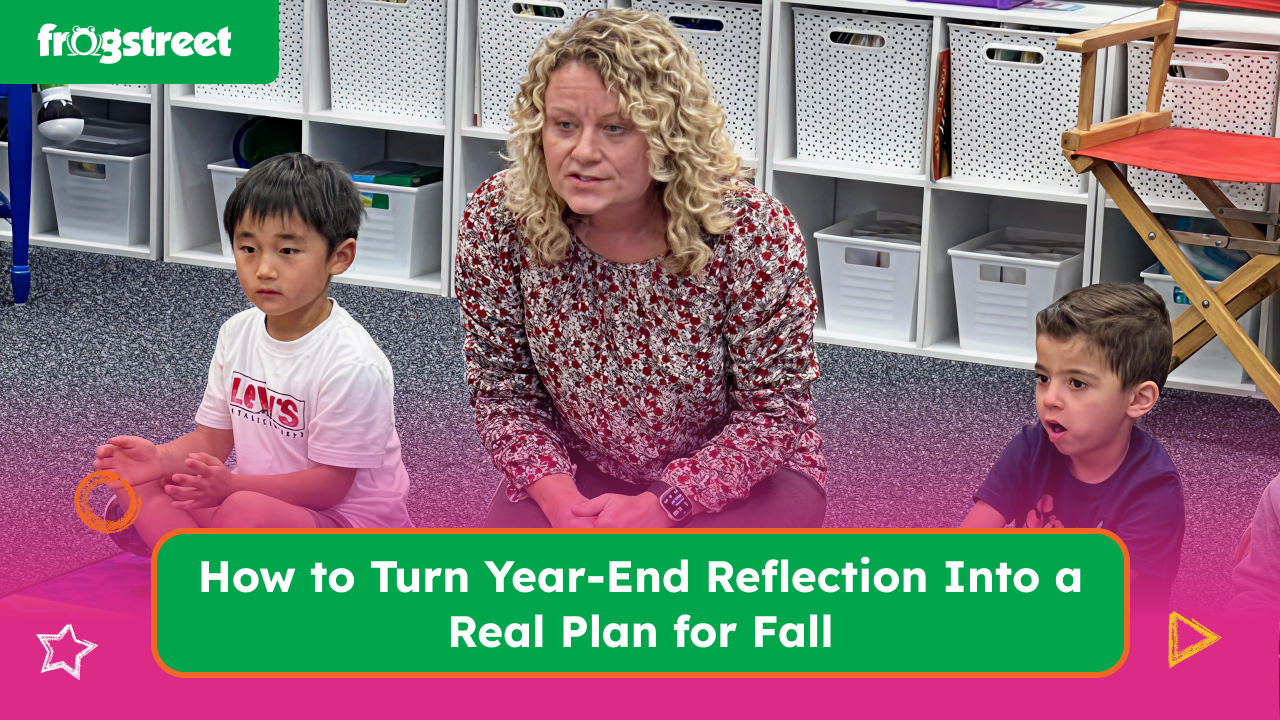
Year-end reflection often happens while fall planning is already underway. You may already be balancing classroom transitions, staffing adjustments, enrollment changes, and family communication while your educators continue supporting children through daily learning
experiences.
During this season, reflection is most useful when it helps you identify which classroom systems are already supporting continuity and which systems need to be strengthened before fall begins.
Instead of rebuilding systems every year, you can strengthen the routines, classroom structures, and developmental supports that already help children move confidently through transitions and learning experiences.
This approach helps children experience more connected transitions, supports stronger educator alignment, and creates learning environments that feel more familiar and developmentally connected across the Birth-to-Five journey. Before the last staff day, it may help to confirm which routines will continue into fall, which handoff documentation is complete, and which systems still need strengthening before transitions accelerate further.
What Should Year-End Reflection Actually Focus On?
Year-end reflection becomes more valuable when you focus on the classroom systems and developmental patterns that helped children and educators move through transitions with greater confidence and consistency throughout the year.
Many programs naturally reflect on child growth, classroom experiences, and family engagement. The most actionable insights often come from identifying which routines, support systems, and instructional practices already helped classrooms remain connected during transitions and operational changes.
Reflection becomes more useful when it identifies which systems already support continuity and should remain in place moving into the fall.
For example, some classrooms transition more smoothly because children recognize familiar expectations across age groups. You may also notice stronger family confidence when communication consistently reinforces how developmental progress will continue into the next classroom experience.
Programs often uncover important patterns by examining:
- Which classroom routines helped children transition confidently
- How familiar expectations reduced reorientation across age groups
- Which educator supports strengthened consistency throughout the year
These insights can help you preserve developmental momentum instead of restarting routines and classroom expectations every fall.
Why Does Continuity Matter During Classroom Transitions?
Continuity helps children move into new classroom environments with greater confidence because familiar routines, expectations, and relationships continue supporting development across transitions.
As classroom placements and schedules begin shifting, familiar structures often help children feel more secure as they adapt to new environments. Connected classroom experiences can also reduce the time children spend relearning routines and expectations after each transition.
Educators also benefit from continuity because aligned classroom systems reduce the need to rebuild routines independently each year.
Families feel more confident when transitions feel organized and connected across the program. Communication becomes more meaningful when it highlights how learning, routines, and developmental progress continue to move forward rather than start over.
This continuity creates smoother transitions because children already recognize many of the routines, expectations, and relationships supporting them.
How Can Year-End Reflection Become a Practical Planning Tool?
Year-end reflection becomes more actionable when you use it to identify which systems are already supporting classroom consistency, so your team can strengthen them before transitions accelerate.
The strongest planning processes often build on what already works effectively rather than introducing disconnected new systems every fall. This creates a more manageable planning process because educators can continue carrying forward successful routines and classroom practices.
Staffing reflection is more valuable when it examines the conditions that helped classrooms remain steady during transitions. Curriculum reflection becomes more useful when it focuses on continuity across classrooms rather than isolated activities.
Programs often create smoother transitions when children continue experiencing familiar instructional language, routines, and social-emotional supports as they move between age groups.
Family communication also plays an important role. Earlier communication timelines, clearer transition expectations, and stronger developmental connections often help families feel more confident throughout transition periods.
When families understand how routines, classroom expectations, and developmental goals will remain connected across age groups, transitions often feel more familiar and manageable for everyone involved.
The Director’s Field Guide to Year-End Transitions supports programs preparing for classroom transitions, developmental handoffs, and continuity planning before fall routines begin taking shape.
How Do Strong Programs Use Summer Reflection to Protect Momentum?
You can use summer reflection to protect developmental momentum by strengthening the systems children and educators already rely on consistently throughout the year.
Instead of introducing disconnected routines during transitions, many successful fall plans build from familiar classroom structures that children and educators already recognize and trust.
This preparation often includes:
- Reviewing developmental handoff information early
- Aligning classroom expectations across age groups
- Organizing curriculum resources proactively
- Preparing communication timelines before transitions accelerates
When these systems are prepared before fall begins, educators can spend less time rebuilding routines and more time extending classroom experiences that children already recognize and feel comfortable navigating.
This approach helps transitions feel more connected across classrooms and age groups. Children enter new environments with greater familiarity because routines, expectations, and classroom experiences continue building on what they already know.
Why Is Continuity More Valuable Than Starting Fresh?
Continuity helps you extend progress across classrooms and transitions instead of rebuilding routines, expectations, and classroom systems every fall.
Many classroom routines, instructional strategies, and developmental supports already work effectively by the end of the year. Reflection can help you identify which systems are creating stability for children and educators, so those supports can continue to carry forward into the next season.
This creates stronger consistency across classrooms and transitions. Children move into new environments with greater familiarity, while educators can focus more fully on relationships and classroom experiences from the beginning of the year.
Families also benefit from clearer communication and more connected transitions across age groups.
Reflection becomes more meaningful when it helps programs recognize which systems are already supporting children successfully and are worth carrying forward into fall.
What Should Programs Prioritize Before Fall Begins?
Before fall begins, it often helps to prioritize the systems that support continuity immediately for children, educators, and families.
The strongest fall launches usually occur when classroom systems are already in place before transitions accelerate. This preparation creates stronger consistency across classrooms while helping educators focus more fully on relationships, classroom experiences, and developmental support.
Before fall begins, programs often prioritize:
- Classroom handoff systems
- Developmental documentation processes
- Curriculum continuity across age groups
- Family communication structures
When these systems are aligned early, transitions often feel more connected for children and more manageable for teaching teams as new classroom routines begin taking shape.
Programs that strengthen these systems early often experience smoother classroom transitions, stronger educator confidence, and more connected implementation across the program.
When reflection leads directly into planning, children experience more connected transitions, and educators begin the year with greater clarity and alignment.
Supporting Fall Readiness Across the Birth-to-Five Journey With Frog Street
Strong fall planning begins with continuity. When reflection stays connected to the classroom experiences children and educators rely on every day, transition planning often becomes more manageable and more effective.
Children benefit when routines, expectations, and developmental support feel familiar across classrooms. Educators benefit when classroom systems stay aligned instead of restarting every fall. Families also experience greater confidence when transitions feel organized and connected.
As you prepare for fall, continuity can help preserve the momentum your classrooms have already built, rather than requiring educators and children to rebuild routines from the beginning of each transition.
Transition planning becomes more effective when classroom systems, educator support, and developmental continuity stay aligned throughout the year. The Director’s Field Guide to Year-End Transitions helps programs strengthen continuity while preserving developmental momentum across transitions. Frog Street provides planning resources and professional learning that help programs strengthen those connections before fall begins.
Frequently Asked Questions
What is the purpose of year-end reflection in early childhood programs?
Year-end reflection helps programs identify operational patterns, strengthen continuity, and create actionable plans before the next program year begins.
Why is continuity important during classroom transitions?
Continuity helps children feel secure by preserving familiar routines and expectations as they move between classrooms. It supports educators by reducing the need to rebuild systems independently, and strengthens family confidence by making transitions feel organized and connected rather than abrupt.
How can programs improve developmental handoffs between classrooms?
Programs can strengthen developmental handoffs by aligning routines, developmental expectations, and communication systems across age groups.
How can reflection become more actionable for fall planning?
Reflection becomes more actionable when it focuses on the systems that consistently supported stability and continuity throughout the year.
What should programs prioritize before fall begins?
Programs should prioritize classroom handoffs, educator readiness, curriculum continuity, family communication, and operational systems that support smooth transitions.