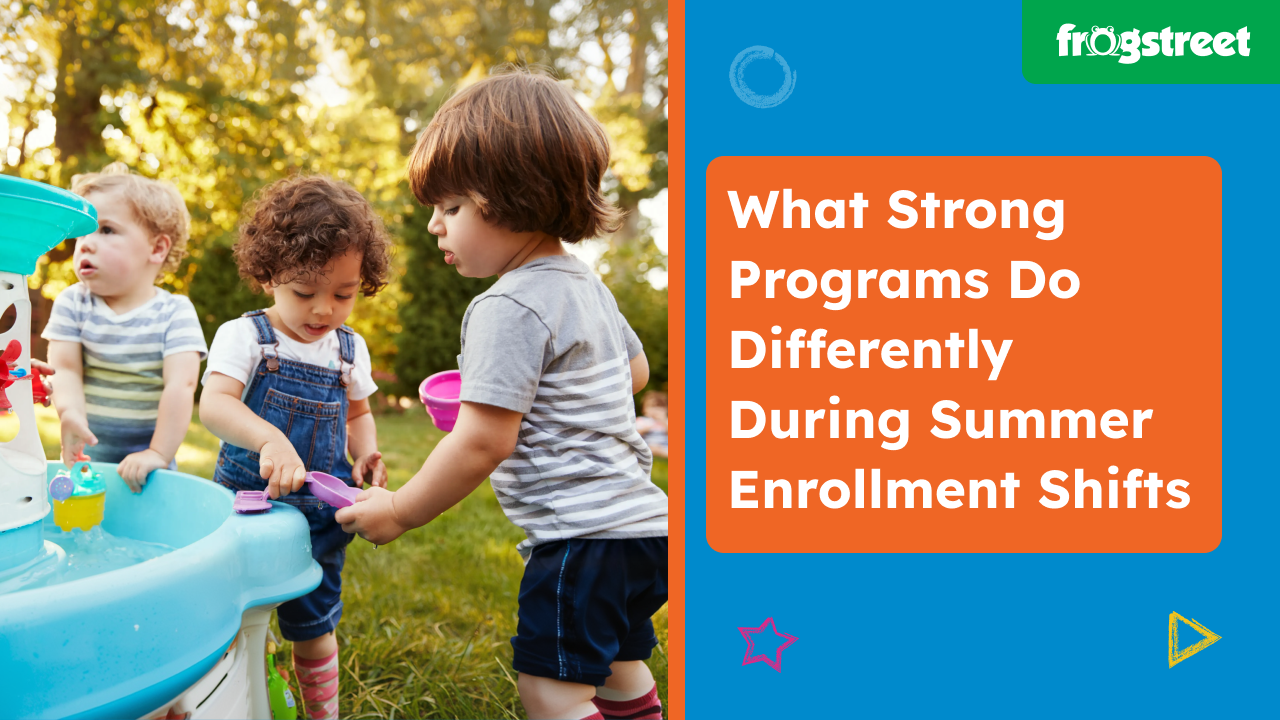
Summer enrollment shifts often place you and your team in the middle of multiple transitions at once. Classroom assignments evolve, staffing schedules adjust, and children move into new environments while educators continue supporting learning, routines, and relationships every day.
As you prepare for these changes, continuity can quickly become harder to maintain when staffing patterns, schedules, and classroom expectations begin shifting simultaneously. The strongest transition systems help you preserve stability for children and educators, even while operations continue evolving throughout the summer.
When continuity is maintained across classrooms, children experience more familiar expectations, educators work within aligned structures, and families often feel more confident during transitions.
Why Do Summer Enrollment Shifts Reveal Continuity Gaps?
Summer enrollment shifts often reveal how connected your classroom systems remain as daily routines and staffing structures begin to change simultaneously. These transitions affect classroom momentum long before they affect schedules or staffing charts.
As you manage enrollment movement, ratios, room assignments, and staffing coverage, it can be easy for continuity challenges to arise in daily classroom experiences when classroom expectations and routines vary across environments.
This creates a different planning mindset. Instead of focusing solely on operational efficiency, you can help children move into new environments that still feel familiar and connected.
Children experience continuity through predictable routines, aligned expectations, and familiar classroom structures. Educators experience continuity when systems reduce uncertainty rather than create additional complexity during already active seasons.
Summer often reveals whether classrooms are truly connected or simply adjacent. When continuity systems remain aligned across classrooms, children can carry confidence, routines, and learning momentum more naturally through transitions.
How Do Strong Programs Maintain Continuity During Summer Enrollment Shifts?
You can maintain stronger continuity during summer enrollment shifts by aligning classroom experiences across age groups before transitions begin accelerating.
When routines, instructional language, and classroom expectations already feel connected across environments, children often move into new classrooms with greater confidence and less reorientation. Familiar classroom experiences help children spend less time adjusting to new structures and more time engaging in relationships, exploration, and learning.
This consistency also helps educators extend learning sooner, rather than rebuilding classroom systems from the beginning after every classroom move. Connected developmental experiences across the Birth-to-Five journey often make transitions feel more stable for children, families, and teaching teams alike.
This alignment often includes:
- Shared instructional language across classrooms
- Consistent social-emotional development practices
- Familiar transition routines between age groups
- Connected developmental expectations
- Similar approaches to guided play and exploration
Aligned developmental handoff processes can also help educators carry meaningful insight forward before transitions occur. When teaching teams already understand how children communicate, engage socially, and navigate routines, developmental momentum is more likely to continue building rather than reset with every classroom change.
The goal is not simply smoother scheduling, but preserving developmental momentum across transitions.
Programs reviewing continuity systems now can use the Director’s Field Guide to Year-End Transitions to strengthen classroom alignment, educator readiness, and transition planning before fall preparation begins.
Why Do Strong Programs Focus on Familiarity During Transitions?
Familiarity often helps children move through transitions with greater confidence because connected classroom experiences reduce uncertainty during periods of change.
During enrollment shifts, children may already be adjusting to new spaces, schedules, educators, and classroom expectations. Familiar routines, instructional language, and relationship practices can help transitions feel more stable while children adapt to new environments.
You can often create that consistency by aligning classroom expectations and support practices across age groups before transitions happen. When children recognize routines and developmental expectations across classrooms, they can spend more time engaging in relationships, exploration, and learning instead of relearning how the environment works.
This consistency also supports educators. Aligned classroom systems help teaching teams extend learning more quickly while reducing the need to reinvent routines independently at every transition.
How Do Strong Programs Support Educators During Summer Transitions?
You can better support educators during summer transitions by creating systems that reduce
unnecessary variability across classrooms and schedules.
Transition challenges often increase when educators must independently recreate routines, communication systems, and classroom expectations during already active enrollment periods. Aligned support systems help your team carry successful classroom practices forward rather than starting over at every transition.
Professional learning also remains connected to active operations. During summer transitions, educator support often works best when it fits naturally into existing schedules rather than relying on large blocks of uninterrupted time.
This may include:
- Short implementation-focused learning opportunities
- Classroom-connected coaching
- Differentiated support for new and returning educators
These support structures help educators maintain consistency across classrooms while continuing to build on the relationships and learning experiences children already recognize.
What Do Strong Programs Measure During Summer Transitions?
As you move through summer transitions, it can help to measure continuity signals alongside operational completion.
Schedules may be finalized and classrooms fully staffed, yet transitions can still feel disconnected when continuity breaks down beneath those systems. Looking closely at how children, educators, and families experience classroom changes often reveals whether alignment is consistent across environments.
Important continuity indicators often include:
- How confidently children engage in new classroom environments
- Whether routines transfer smoothly between age groups
- How consistently developmental expectations remain aligned
- Whether educators can extend learning instead of rebuilding routines
- Whether classroom momentum continues through staffing changes
When continuity remains visible across these experiences, transitions often feel more stable for children and more manageable for teaching teams as fall preparation begins accelerating.
How Do Strong Programs Prepare for Fall Without Starting Over?
You can prepare more effectively for fall by extending the momentum your classrooms have already built instead of rebuilding systems from the beginning each year.
Rather than unnecessarily resetting classroom structures, many successful transition plans carry forward routines, instructional approaches, and communication systems that children and educators already recognize and trust.
When developmental expectations and classroom experiences stay connected across age groups, children often return to learning environments that feel more familiar and stable. Educators can also spend more time building relationships and extending learning instead of recreating classroom systems from scratch.
Reflection becomes most valuable when it strengthens the systems children already rely on successfully every day. This helps maintain continuity across transitions, rather than reintroducing it after the school year begins.
Strong transition planning does not treat summer enrollment shifts as interruptions to progress. It helps you carry instructional consistency, classroom stability, and developmental momentum forward into fall.
Extend Continuity Across Every Transition
Summer enrollment shifts often reveal how consistently children experience routines, relationships, and learning expectations across your classrooms as transitions begin to accelerate.
When familiar classroom structures remain consistent across environments, children often move into new settings with greater confidence and engagement, even as schedules and classroom placements continue to evolve. These familiar experiences help reduce unnecessary reorientation during active transition periods.
Connected classroom experiences also support educators during active transition seasons. Aligned developmental expectations and instructional practices help your educators sustain learning momentum rather than rebuilding classroom systems with every classroom move. This consistency can also help fall preparation feel more manageable while classrooms remain fully active throughout the summer.
The Director’s Field Guide to Year-End Transitions helps teams strengthen classroom alignment, educator readiness, and continuity planning during enrollment changes. Strong continuity grows when curriculum, developmental progression, and everyday classroom experiences remain connected across age groups. Frog Street helps programs carry that momentum forward through resources designed to support long-term developmental alignment.
Frequently Asked Questions
How do programs balance enrollment changes without disrupting classrooms?
Programs balance enrollment changes more effectively when classroom movement plans, staffing adjustments, and daily schedules are coordinated before transitions begin.
Why are enrollment shifts more complex during the summer months?
Summer enrollment shifts often happen while classrooms remain fully active, requiring programs to manage transitions, staffing coverage, and family communication simultaneously.
What operational systems help programs manage enrollment transitions smoothly?
Clear classroom capacity planning, aligned staffing structures, transition timelines, and proactive communication systems help programs manage enrollment movement more consistently.
How can programs reduce scheduling stress during summer transitions?
Programs often reduce scheduling stress by preparing classroom movement plans early and maintaining consistent operational expectations across environments.
What helps programs maintain momentum while preparing for fall enrollment?
Programs often maintain stronger momentum when transition planning, staffing coordination, and classroom preparation occur gradually throughout the summer rather than all at once before fall begins.