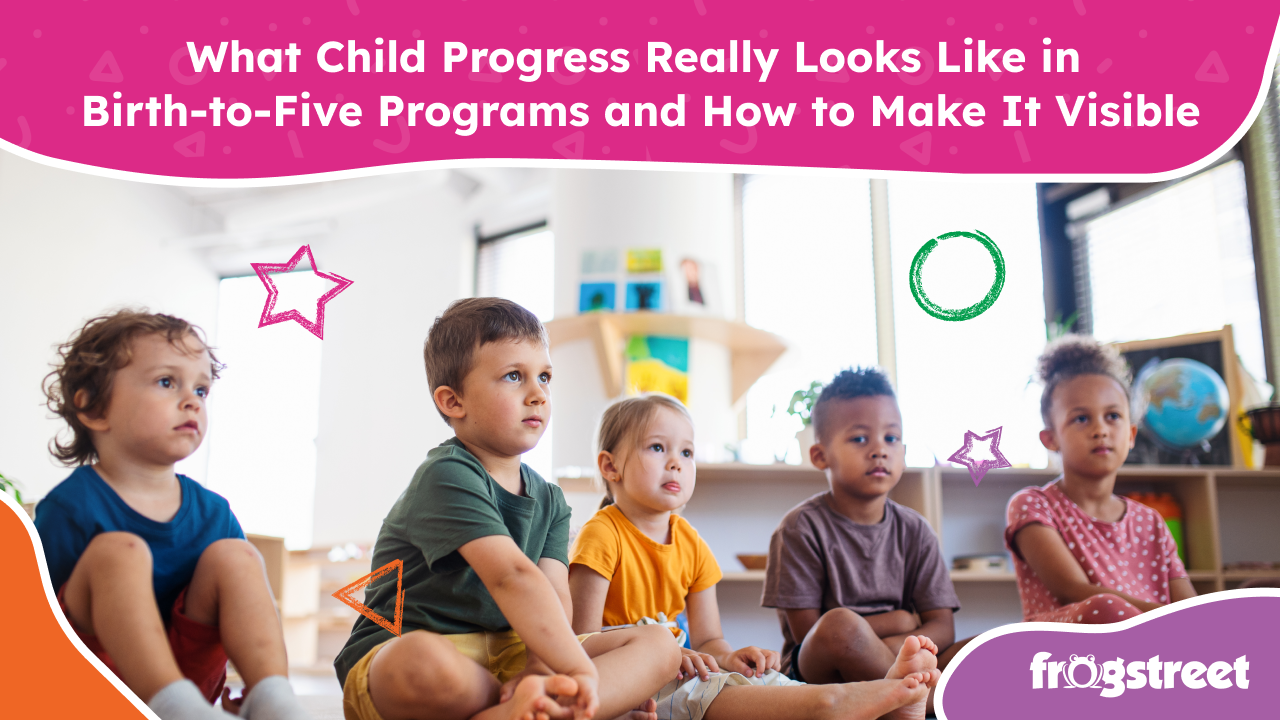
Child progress is already unfolding across your classroom through the experiences you create and the relationships you build. You see it in the way children engage more fully, respond with more intention, and move through the day with growing confidence. These moments reflect the consistency and care you bring to your practice.
A child who once waited now steps into play with purpose. Another child who hesitated to communicate now shares ideas more clearly during conversations and routines. These shifts show how development grows through repeated, meaningful experiences.
What makes this work powerful is that you notice these changes as they happen. You already hold the clearest understanding of how each child is growing. The opportunity now is to make that understanding visible in ways that others can recognize.
What Child Progress Really Looks Like Across the Program Year
Child progress is not defined by what children complete. It is defined by how their behavior, confidence, and responses evolve over time and reflects development across multiple domains, including language, social, emotional, and cognitive growth, as children apply skills in different ways and contexts.
Across the birth-to-five journey, growth builds in layers. Children carry forward what they have learned, strengthening it through consistency and connection. Each classroom adds depth to what came before rather than starting from the beginning.
You may already see this development through patterns such as:
- Children shifting from observing to initiating interaction
- Communication moving from reactive to intentional
- Emotional responses are becoming steadier and more regulated
- Independence showing up across multiple parts of the day
These patterns reflect development that is both sustained and transferable. They show how learning becomes part of how children think and respond, not just what they can demonstrate.
When Progress Becomes Less Visible Because It Feels Normal
One of the most important shifts to recognize is this: progress becomes less visible when it becomes routine. When something works consistently, it no longer stands out as change. It becomes part of the classroom flow.
A transition that once required support now happens smoothly. A child who once needed prompting now participates without hesitation. These moments reflect significant development, even though they feel ordinary.
This is where much of the strongest growth lives. It is found in what no longer requires your attention. Recognizing this allows you to bring visibility back to progress that has already taken hold.
How Can You Recognize Growth That Has Already Taken Root?
You can recognize growth by identifying what has shifted from effort to ease. Instead of focusing only on new skills, you can look at how existing skills are now used consistently and independently. This perspective reveals development that is already established.
You may notice that children move through routines with confidence or engage with peers more naturally. You may also see that responses are more thoughtful and less reactive. These patterns show how children are applying what they have learned across different contexts.
Educators often bring this into focus by reflecting on:
- What no longer requires prompting or reminders
- What feels smoother than it did earlier in the year
- What children now do independently across multiple situations
- What behaviors have become consistent rather than occasional
This approach does not add new work. It sharpens your ability to see what is already happening.
Making Progress Visible by Capturing Change, Not Just Moments
You are already observing meaningful development throughout your day. Making progress visible becomes more powerful when you focus on capturing change rather than isolated moments. This shifts documentation from description to insight.
Instead of only noting what a child does, you can highlight how that behavior has evolved. A simple observation becomes more meaningful when it reflects growth over time. This creates clarity for families and leaders without increasing educators’ complexity.
You can strengthen this approach by focusing on:
- Capturing moments that show contrast from earlier behavior
- Using language that reflects how responses have changed
- Connecting current behavior to previous patterns
- Highlighting consistency across different parts of the day
These approaches allow educators to capture growth through multiple forms of evidence, including observation, conversation, play, and child-created work, reflecting the many ways children demonstrate learning.
Why Visibility Changes How Others Understand Your Work
Families and leaders do not see the full arc of development the way you do. They experience individual moments, but not always the progression behind those moments. Visibility bridges that gap.
When you highlight how a child has changed over time, families begin to understand development more deeply. They see how communication, relationships, and confidence are evolving. This creates a stronger connection and shared understanding. Families also benefit from communication that is clear, accessible, and connected to real classroom experiences, helping them recognize growth in ways that feel meaningful and easy to understand.
For leaders, visibility brings clarity across classrooms. It allows patterns of development to emerge and supports alignment across the program. This helps ensure that growth is recognized at every level.
Connecting Growth Across Classrooms Through Shared Understanding
Child progress becomes more meaningful when it connects across the entire program. What children learn in one classroom continues to develop in the next. This creates a continuous pathway rather than isolated experiences.
When educators share a common lens for recognizing progress, they build on what children already know. This allows development to deepen rather than restart. It also creates consistency in how growth is understood and supported.
Programs often recognize this alignment through patterns such as:
- Children responding confidently to familiar expectations in new classrooms
- Language and social skills building across age groups
- Educators extending learning rather than reintroducing it
- Children engaging quickly in new environments
These patterns reflect a shared understanding of development. They show how growth carries forward across the birth-to-five journey.
Honoring Educators by Letting Assessment Reflect Their Thinking
You already have the most accurate understanding of a child’s progress. You observe how children change, interpret what those changes mean, and respond in ways that support continued growth. This insight is central to meaningful assessment.
Assessment becomes more valuable when it reflects how you already think about development. Instead of translating your observations into separate formats, it allows your understanding to remain intact. This keeps documentation aligned with your practice. When assessment is embedded within daily routines, interactions, and intentional teaching, it becomes a natural extension of classroom practice rather than a separate task.
This is where assessment shifts from a task to a form of recognition. It highlights the connection between your daily work and the growth you support. It makes your impact visible without changing how you teach.
How Can End-of-Year Reflection Capture Growth That Has Been Building All Along?
An end-of-year reflection allows you to see the full progression of development over time. When you compare where children started to where they are now, the depth of growth becomes clear. These changes reflect the consistency of your teaching and the strength of your classroom environment.
Focusing on key shifts can deepen this reflection. You may recall when a child began engaging more confidently or communicating more clearly. These moments mark where development began to take hold.
This reflection brings together what you have seen throughout the year. It allows you to recognize the growth you have supported and prepare to share it in ways that feel accurate and meaningful.
Make Progress More Visible Without Adding Work
You are already noticing how children grow through daily experiences, interactions, and routines. When that growth becomes easier to capture and share, it strengthens how families and leaders understand your work.
If you are looking for a simple way to make progress more visible across your classrooms, the Celebrating Growth Through Meaningful Assessment Guide offers practical ways to connect what you already observe to clear, meaningful communication. It’s designed to support the work already happening in your classrooms while helping others recognize it more clearly.
Frequently Asked Questions
What is child progress in early childhood programs?
Child progress is how a child’s behavior, communication, and responses change over time. It reflects development across multiple domains.
Why does child progress sometimes feel less visible?
Progress becomes less visible when it becomes part of the daily routine. When something feels natural, it no longer stands out as change.
How can educators recognize meaningful progress?
Educators recognize progress by focusing on what children now do consistently and independently across different situations.
How can progress be documented in a meaningful way?
Progress becomes meaningful when documentation reflects change over time, not just individual moments.
Why is it important to make progress visible?
Making progress visible helps families and leaders understand development clearly and recognize the impact of daily teaching.
Supporting Visible Growth Across Your Program with Frog Street
Child progress is visible in how children engage, respond, and grow more confident over time. These patterns reflect development across the birth-to-five journey. When programs make this growth visible, they build shared understanding, strengthening connections among educators, families, and leaders. Frog Street supports this work by connecting intentional teaching, embedded observation, and meaningful assessment in ways that reflect how children learn through everyday experiences
If you are looking for a place to begin, the Celebrating Growth Through Meaningful Assessment Guide offers leaders a way to connect progress across classrooms and create a shared understanding of development. It’s designed to support the work you are already doing, helping make progress easier to see, share, and carry forward.
As this work continues, the progress you have supported becomes clearer across classrooms and age groups. Educators build on shared understanding, and families experience a deeper connection to how their child is growing each day. This creates a more connected and meaningful early learning experience, where the growth you see every day carries forward with clarity, recognition, and the kind of support that ensures it is never overlooked, with Frog Street as part of that journey.